
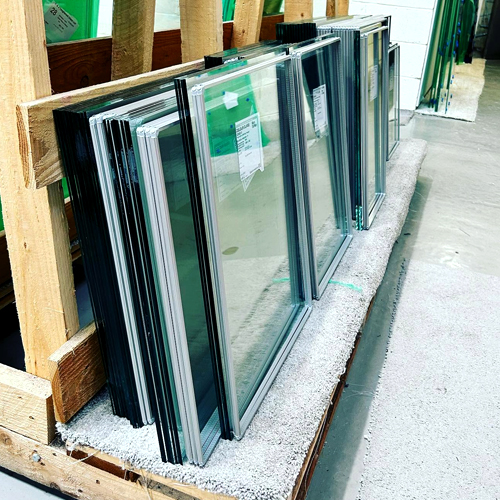
Use our free glass weight calculator to estimate the weight of float, toughened, laminated, double-glazed and triple-glazed glass. Enter the panel dimensions, choose the glass type and thickness, and you’ll get an instant estimated weight.
The calculator uses a standard glass density of approximately 2,500 kg/m³, making it useful for planning, handling and quotation checks before ordering or installing glass.
How to Use the Glass Weight Calculator
- Enter the panel size
Add the glass width and height in millimetres. - Choose the glass type and thickness
Select the option that matches the glass you are working with. - Calculate the weight
Select Calculate glass weight to see the estimated total weight of the panel.
The result is intended as a practical planning estimate for handling, quoting and installation checks.
Calculate Glass Weight
To calculate the weight of glass, use the standard glass density of approximately 2,500 kg/m³.
Glass Weight Formula
Weight (kg) = Length (m) × Width (m) × Thickness (mm) × 2.5
For example, a 1000 × 1000 mm panel of 6 mm glass weighs approximately:
1 × 1 × 6 × 2.5 = 15 kg
Float and toughened glass of the same thickness weigh approximately the same. Laminated glass is slightly heavier because of the interlayer, while double- and triple-glazed units combine the weight of each pane.
Glass Weight Chart (kg per m²)
The weight of glass per m² is commonly expressed in kilograms per square metre (kg/m²).. For standard float and toughened glass, each millimetre of thickness weighs approximately 2.5 kg/m².
Float & Toughened Glass Weight Chart
| Thickness | Approx. weight |
|---|---|
| 4 mm | 10 kg/m² |
| 6 mm | 15 kg/m² |
| 8 mm | 20 kg/m² |
| 10 mm | 25 kg/m² |
| 12 mm | 30 kg/m² |
| 15 mm | 37.5 kg/m² |
| 19 mm | 47.5 kg/m² |
Float and toughened glass of the same thickness weigh approximately the same because the toughening process does not materially change the amount of glass.
Laminated, Double & Triple Glazing Weight
Laminated glass is slightly heavier because of its interlayer, while double- and triple-glazed units are calculated from the combined thickness of the glass panes.
| Glass type | Typical build | Approx. weight |
|---|---|---|
| 6.4 mm laminated | 3 + 3 mm glass + interlayer | ~16 kg/m² |
| 8.8 mm laminated | 4 + 4 mm glass + interlayer | ~22 kg/m² |
| 10.8 mm laminated | 5 + 5 mm glass + interlayer | ~27 kg/m² |
| Double glazed 4-16-4 | 8 mm total glass | ~20 kg/m² |
| Double glazed 6-12-6 | 12 mm total glass | ~30 kg/m² |
| Triple glazed 4-16-4-16-4 | 12 mm total glass | ~30 kg/m² |
Figures are approximate. Laminated glass can vary slightly depending on the interlayer, while spacer bars and gas fills add relatively little to the overall weight.
Glass Weight, Handling & Installation
Glass weight affects how a panel should be handled, supported and installed. Larger panes, laminated glass and double- or triple-glazed units can become heavy very quickly, so estimating the weight beforehand helps you plan the job safely.
Knowing the approximate weight can help you determine whether additional people, glass suckers, trolleys or other lifting equipment may be needed. It also allows you to check that frames, hinges, brackets and fixings are suitable for the finished load.
Glass thickness should be chosen for the specific application and installation requirements, rather than weight alone. Balustrades, shower screens, doors, roof glazing and other safety-critical applications may require particular glass specifications.
Use the glass weight calculator as a practical planning and quotation tool. For structural, safety-critical or unusually large installations, confirm the required glass specification and supporting system before ordering.
How Accurate Is the Glass Weight Calculator?
The calculator provides a reliable estimate using the standard glass density of approximately 2,500 kg/m³. For float and toughened glass, this gives results that closely match standard glass weight charts.
For laminated glass, the interlayer adds a small amount of additional weight, while double- and triple-glazed calculations are based primarily on the combined weight of their glass panes.
The calculator is suitable for:
- Planning and quoting
- Estimating handling and lifting requirements
- Comparing glass sizes and thicknesses
- Checking approximate loads before installation
Results should be treated as an estimate rather than a structural specification. Frames, hardware, spacer bars and other components are not included in the calculated glass weight.
Frequently Asked Questions
For standard glass:
Weight (kg) = Length (m) × Width (m) × Thickness (mm) × 2.5
For example, a 1 m × 1 m panel of 6 mm glass weighs approximately 15 kg.
Standard glass weighs approximately 2.5 kg/m² for every millimetre of thickness. For example, 4 mm glass weighs around 10 kg/m², 6 mm glass around 15 kg/m² and 10 mm glass around 25 kg/m².
A 6 mm sheet of float or toughened glass weighs approximately 15 kg per square metre. The total panel weight depends on its width and height.
No. Float and toughened glass of the same thickness weigh approximately the same. Toughening changes the strength and breakage characteristics of the glass, not its basic density.
It depends on the thickness of the glass panes. A typical 4-16-4 double-glazed unit contains 8 mm of glass and weighs approximately 20 kg/m², while a 6-12-6 unit contains 12 mm of glass and weighs around 30 kg/m².